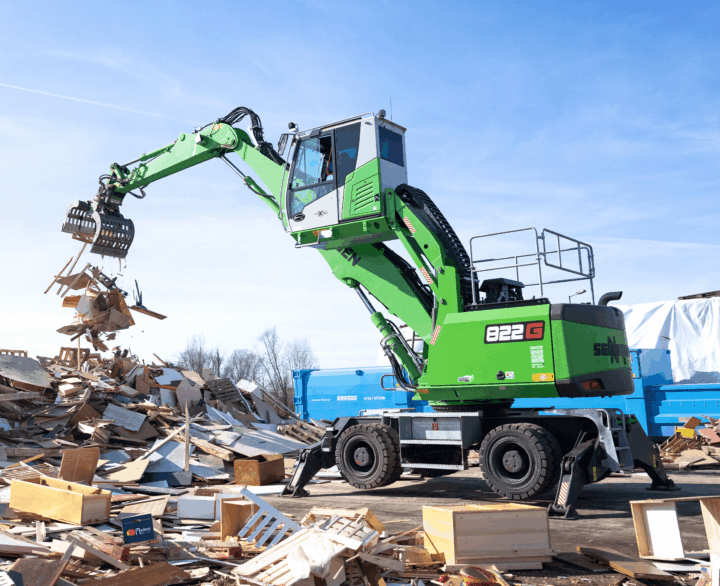
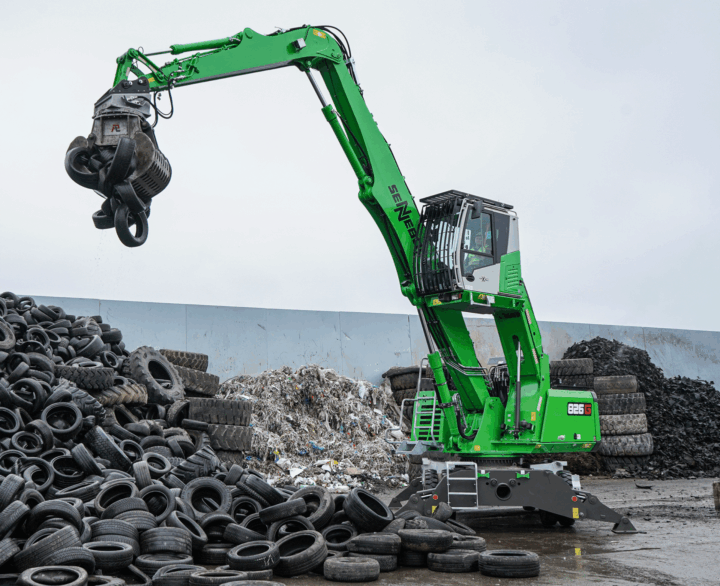
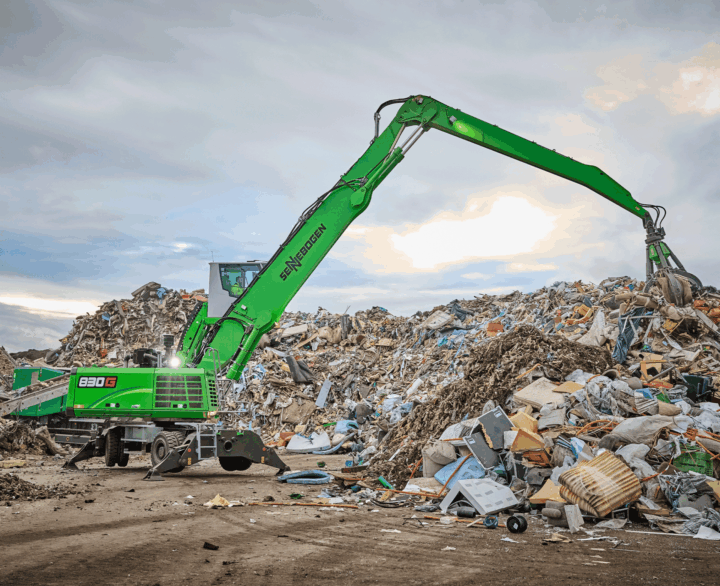
Family-run FDS Waste has expanded its fleet of waste handlers with a new Sennebogen 822G to support growing volumes across their Dorset site. Brought in to handle heavier workloads, the machine has quickly become a key part of daily operations.
Family values
There’s no missing the fact that FDS Waste is a proper family business. It’s run by Phil Pidgley and his two sons, Danny and Carl, with several other family members playing key roles too. Danny handles yard and operations, Carl has been running the weighbridge and office for 16 years, and Jodie Pidgley has been managing the accounts for over two decades. Even Alfie, who operates the new 822G, is part of the family and takes care of the skip side of the business.
Together, they’ve been based in Dorset for 19 years, gradually growing from a small local operation into a well-known waste and recycling name in the area. And in the last couple of years, FDS has stepped up its game in a big way. They’ve built two new sheds on-site, taken on more work, and continued investing in the kit that keeps everything moving. Most recently, they secured a new contract that brings in 20 arctic loads of waste every week. This is a serious step up in volume that called for more firepower on the ground. That’s where the Sennebogen 822G comes in.
Stepping up the Sennebogen range
“We’ve already had a couple of Sennebogen’s: the 818e and 817e waste handlers, and we’ve been happy with them,” says Danny. “But with the extra waste coming in, we knew we needed something bigger and more stable. However, the 817e waste handlers just didn’t feel up to it for the heavier side of the yard.”
The new 822G, which has replaced the popular 818E in the Sennebogen range of waste handlers , has given them the extra reach and lifting capacity needed to keep up with growing volumes. With a reach of up to 12 metres and an operating weight of around 25 tonnes, it’s well suited to demanding, high-throughput environments like the FDS yard.
Maxcab maximises efficiency
The high-rise Maxcab provides excellent visibility, raising the operator’s eye level up to 5.8m. This is particularly useful in helping the operator to see into the body of vehicles when loading, allowing them to ensure each load leaves full, maximising efficiency. At the same time, smooth, responsive hydraulics and intuitive controls help reduce operator fatigue, something Alfie appreciates during long shifts on the machine.
For FDS, the new machine isn’t just about lifting more, it’s about keeping the whole yard moving smoothly. With so much waste coming in, downtime simply isn’t an option.
“It’s flat out here most days,” Danny says. “The 822G just makes things flow better. It’s stable, powerful and the cab gives Alfie a proper view across the yard, so he’s got confidence in tight spaces.”
Molson aftercare makes all the difference
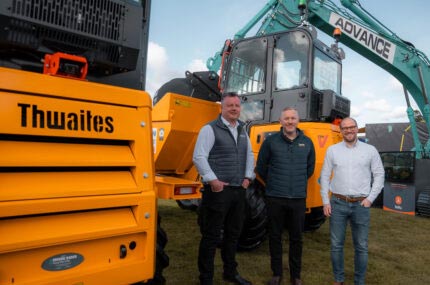
The machine was supplied by Tristan Dorey, southwest area sales manager at Molson, who the Pidgleys have dealt with before. As with previous waste handlers, they were impressed, not just by the kit, but by the support that came with it.
“The aftercare has been spot on,” Danny says. “If we need parts or anything for our waste handlers, Molson is just a phone call away. It’s good to know you’ve got that backup when you need it.” Having worked with Molson for a while now, the team at FDS say the relationship feels more like a partnership than a transaction.
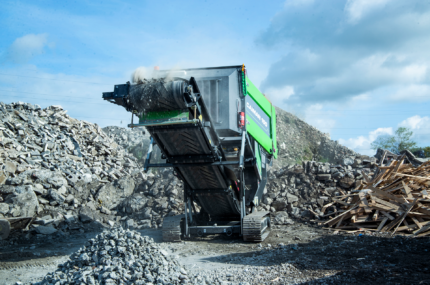
While the 822G is now up and running, the team has also been looking at what else could help them handle their growing workload. They recently had the EvoQuip Caiman 150 on site; a compact twin-shaft shredder designed for the waste and recycling sector.
Adding an EvoQuip shredder
“The Caiman 150 really surprised us,” Danny explains. “It’s compact, but it doesn’t mess around. It’s aggressive, quick to set up and simple to use. For a busy site like this, where we’ve got all kinds of material coming through, it definitely makes sense.”
Built to handle challenging waste streams with ease, the EvoQuip Caiman 150 features a twin-shaft shredder capable of processing a wide range of materials—including bulky, mixed and contaminated waste. Its compact design allows it to slot into tight yards like FDS without compromising output, while the fuel-efficient engine helps keep running costs down. With a throughput of up to 80 tonnes per hour, it delivers the speed and flexibility needed to keep up with a busy site, making it a practical choice where uptime and reliability are critical
With a growing team, more work on the books, and the right waste handlers to process it, FDS is in a strong position heading into its 20th year. And as always, it’s the people behind the business that make it what it is. “We’re not trying to be the biggest,” says Danny. “We just want to do the job properly, look after the people we’ve got, and make sure the work gets done right.”